📄 Article Info
Category: Fun Facts
Author: Fact to Know Editorial Team
Published: October 2025
Keywords: sharks, ocean, predators, marine life
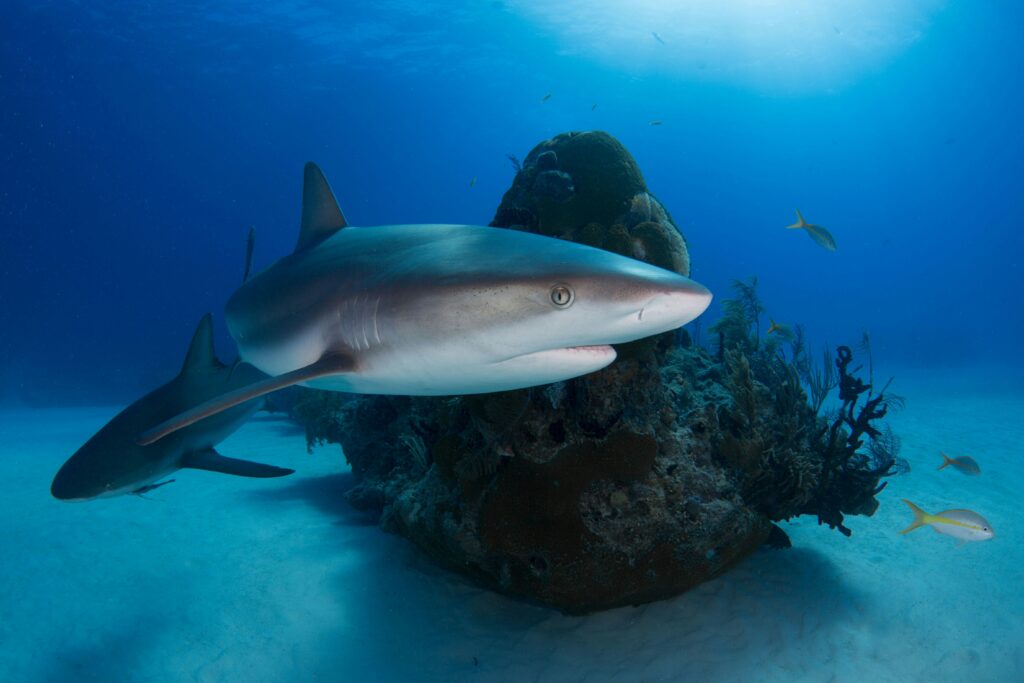
🌊 Introduction — The Legends of the Deep
Sharks have been swimming the Earth’s oceans for more than 400 million years — long before dinosaurs roamed the land.
Yet, despite their ancient legacy, these creatures are still among the most misunderstood in the animal kingdom.
They’ve survived five mass extinctions, outlived dinosaurs, and never stop swimming — sharks are nature’s ultimate survivors.
Here are 10 facts that reveal how these ancient predators rule the oceans.
1️⃣ Sharks Have Existed Longer Than Trees
Yes — you read that right. Sharks appeared around 420 million years ago, while the first trees emerged about 350 million years ago.
That means sharks have survived five mass extinctions, including the one that wiped out the dinosaurs.
Their skeletons are made of cartilage, not bone, which helps them stay light and flexible — an evolutionary advantage that kept them thriving for eons.
🔗 Smithsonian Ocean Portal — Ancient Sharks{:target=”_blank” rel=”nofollow noopener”}
2️⃣ Some Sharks Glow in the Dark
Certain species, like the lanternshark and cookiecutter shark, produce natural light through bioluminescence.
This glow helps them communicate, camouflage, or even attract prey in the dark ocean depths.
Scientists discovered that these glowing sharks have light-producing organs called photophores embedded in their skin — nature’s built-in flashlight.
💡 Fun fact: The smallest glowing shark is only about 6 inches long!
3️⃣ Sharks Can Detect a Drop of Blood from Miles Away
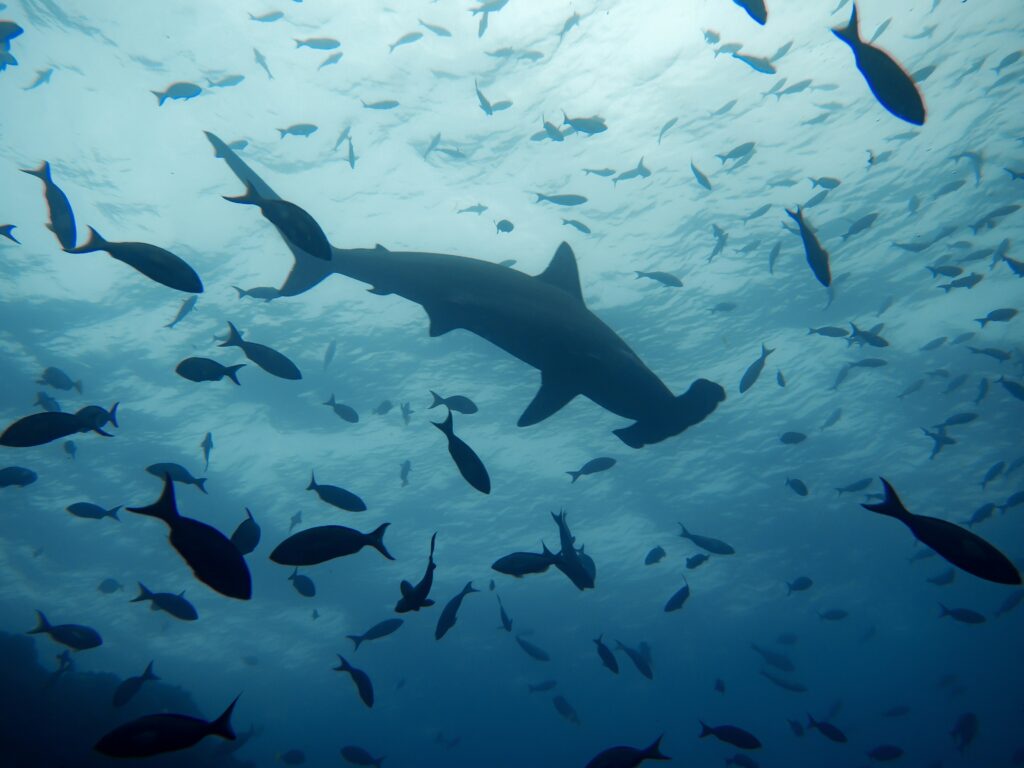
A shark’s sense of smell is legendary — they can detect one drop of blood in 10 billion drops of seawater.
But it’s not just about blood: sharks can sense any trace of amino acids or chemicals that indicate life nearby.
Their nostrils, called nares, aren’t used for breathing but purely for smelling — an evolutionary feature that makes them one of the most efficient hunters on the planet.
🔗 National Geographic — Shark Senses{:target=”_blank” rel=”nofollow noopener”}
4️⃣ They Can Sense Electricity — Literally
Every living creature emits tiny electrical signals.
Sharks use special organs called ampullae of Lorenzini to detect those signals — even the heartbeat of buried fish.
This sixth sense allows them to hunt even when visibility is poor, giving them almost supernatural precision.
🧠 Want to learn how the brain processes electricity? Read our article: 10 Astonishing Facts About the Human Brain
5️⃣ Sharks Don’t Have Bones
Instead of bones, their skeleton is made entirely of cartilage — the same flexible tissue in your nose and ears.
This makes them lighter, faster, and more agile than bony fish.
Interestingly, shark fossils are rare because cartilage doesn’t fossilize easily, so most evidence comes from their teeth — which they replace thousands of times in a lifetime.
6️⃣ Sharks Sleep with Their Eyes Open
Unlike humans, sharks don’t have eyelids that close during sleep.
Some species must keep swimming to push oxygen-rich water through their gills, so they rest half of their brain at a time — a state known as unihemispheric sleep.
That means one side of their brain is alert while the other is resting — a perfect adaptation for a creature that can never truly let its guard down.
7️⃣ Some Sharks Give Birth to Live Young
Not all sharks lay eggs. About 70% of shark species give birth to live pups — a trait called viviparity.
Some even have a placenta-like connection, similar to mammals, that nourishes their young before birth.
It’s another reminder that sharks are more complex and diverse than most people imagine.
8️⃣ Sharks Are Surprisingly Social
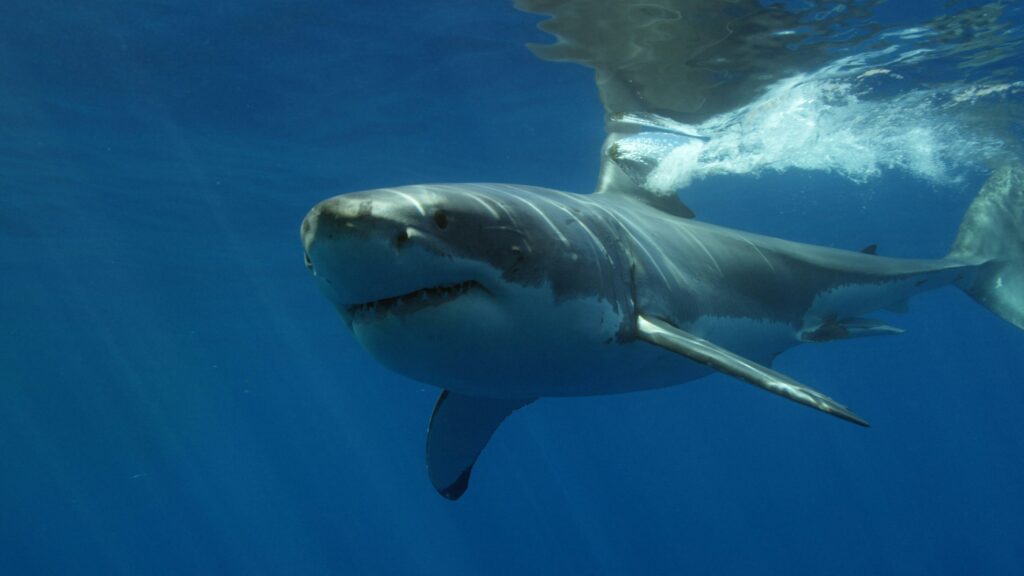
While the image of a “lone great white” dominates pop culture, many shark species are surprisingly social.
Hammerhead sharks, for example, gather in large schools during migration.
Researchers have even observed cooperative hunting behavior — suggesting a level of intelligence far beyond mere instinct.
🔗 BBC Earth — Social Lives of Sharks{:target=”_blank” rel=”nofollow noopener”}
9️⃣ Sharks Are Vital for Ocean Health
Sharks act as nature’s quality-control managers, preying on sick or weak animals and keeping marine populations balanced.
Without sharks, prey species would explode in number, leading to ecosystem collapse.
Conservationists often call sharks the “doctors of the sea.” Protecting them means protecting the entire ocean.
🌍 Read also: How Climate Change Affects Marine Life
🔟 Humans Kill Over 100 Million Sharks Every Year
Sadly, despite their ancient strength, sharks now face their greatest threat: humans.
Between fishing, pollution, and the cruel practice of finning, millions of sharks are killed annually — often just for soup.
Conservation efforts by groups like Shark Trust and WWF are helping to change this, but awareness is key.
The more we understand sharks, the more we’ll see they’re worth saving.
🐋 WWF — Shark Conservation Facts{:target=”_blank” rel=”nofollow noopener”}

🌟 Conclusion — The Ocean’s True Survivors
Sharks are more than predators; they’re survivors, teachers, and guardians of the deep.
They’ve witnessed the rise and fall of countless species, adapting through every challenge.
Next time you see a shark, don’t fear it — respect it.
Because without sharks, our oceans — and our planet — would never be the same.
🖋️ Article Summary
- Primary Keywords: shark facts, marine life, ocean predators, shark senses
- Secondary Keywords: ancient sharks, bioluminescent creatures, shark conservation
- Internal Links:
→ 10 Astonishing Facts About the Human Brain
→ How Climate Change Affects Marine Life - External Links:
→ Smithsonian Ocean Portal
→ National Geographic — Shark Facts
→ BBC Earth
→ WWF — Shark Conservation
📣 Call to Action
🦈 Dive into the deep!
Challenge yourself with our Shark Trivia Quiz — can you tell myth from fact?
🧾 Author & Credits
🖋️ Written by Fact to Know Editorial Team
📅 Published: October 2025 | Updated: October 2025
📬 Contact: contact@facttoknow.com