
🧾 Article Info
Article Info
Category: Learning Tips
Author: Fact to Know Editorial Team
Published: October 2025
Keywords: memory, neuroscience, learning, focus, productivity
Summary: Explore 10 powerful, science-backed methods to accelerate learning and retain knowledge longer — from spaced recall to brain nutrition.

🧩 Introduction
Want to remember more in less time? Modern neuroscience has revealed how our brains actually store and retrieve information — and these 10 practical strategies will help you learn smarter, retain longer, and recall faster.
According to studies from MIT’s Department of Brain and Cognitive Sciences, the key to faster learning lies in how you engage your neural networks, not how long you study.
Here are 10 powerful, neuroscience-approved tricks to make your learning stick — and last.
1️⃣ Use the “Spacing Effect” ⏳
Your brain hates cramming. The Spacing Effect, discovered by psychologist Hermann Ebbinghaus, shows that spacing out learning sessions dramatically improves retention.
🟢 Try this:
Study in short bursts over several days instead of one long session.
Revisit the same material at increasing intervals: 1 day → 3 days → 7 days → 14 days.
🔗 Cognitive Science Review confirms spaced repetition boosts memory by over 200%.
2️⃣ Engage Multiple Senses 👂👁️✋
The more senses you use when learning, the more neural pathways are formed.
For instance, reading aloud, drawing diagrams, and listening to audio summaries activate visual, auditory, and kinesthetic memory systems simultaneously.
🟢 Example:
When studying biology, draw the process, explain it aloud, and listen to a podcast recap later.
3️⃣ Apply the “Active Recall” Technique 🧾
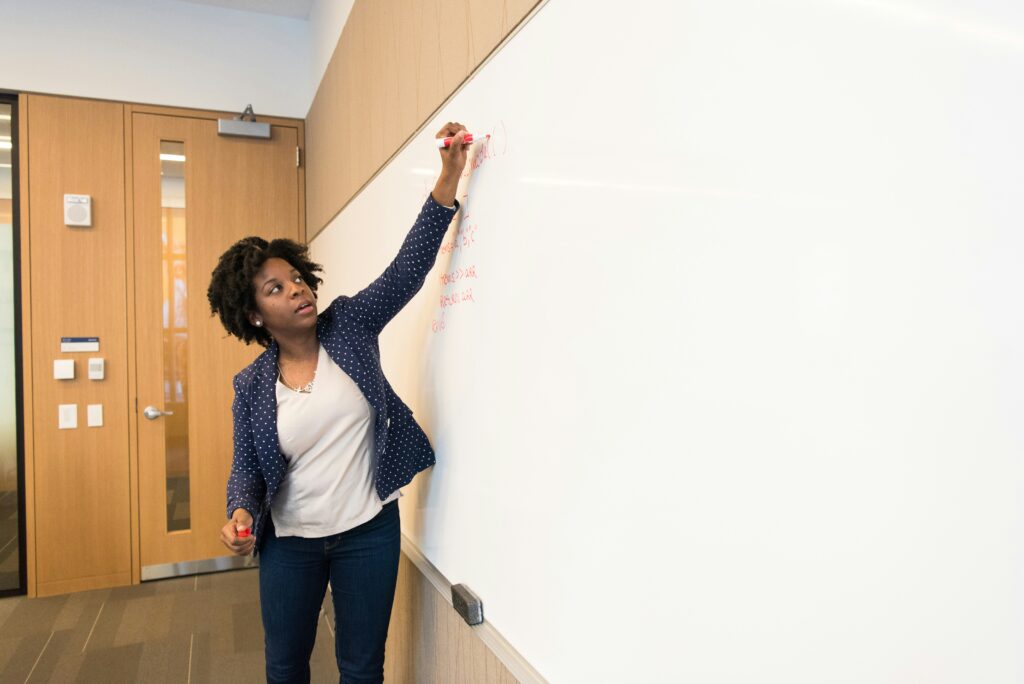
Instead of rereading notes, test yourself.
The testing effect — a principle from cognitive psychology — proves that retrieving information strengthens long-term memory more than passive review.
🟢 Tools:
According to Psychological Science, students using active recall score up to 50% higher.
4️⃣ Learn by Teaching 👩🏫
Explaining something forces your brain to organize knowledge into simple, logical frameworks.
This is known as the Feynman Technique, named after physicist Richard Feynman.
🟢 Try this:
After finishing a chapter, summarize it as if teaching a 10-year-old.
If you stumble — that’s where your understanding is weak.

5️⃣ Sleep to Consolidate Learning 💤
Your brain keeps working while you sleep.
During REM sleep, memories move from short-term (hippocampus) to long-term (neocortex) storage.
🟢 Action tip:
Review key notes right before bed — it significantly improves recall.
According to Harvard Health, even a 90-minute nap enhances retention.
6️⃣ Connect New Knowledge with Old 🧩
Your brain learns through association.
Every new concept connects to existing knowledge through neural “anchors.”
When you relate new information to personal experiences, the brain stores it faster.
🟢 Example:
When learning about electricity, imagine your brain as a network of circuits connecting ideas.
7️⃣ Mix It Up: Interleaving Practice 🔄
Don’t study the same topic repeatedly.
Switch between subjects — for example, alternate math problems with reading exercises.
This technique, called interleaving, trains your brain to adapt and apply concepts flexibly.
🟢 Evidence:
According to University of California, students who use interleaving outperform those who block-study by 25%.

8️⃣ Move While You Learn 🏃♀️
Exercise boosts neuroplasticity — the brain’s ability to rewire itself.
Even light movement increases oxygen flow, improving focus and comprehension.
🟢 Quick hacks:
- Take walking study breaks
- Record notes and listen while jogging
- Stretch during reading sessions
🔗 See also: American Council on Exercise.
9️⃣ Use Emotion to Anchor Memory ❤️
Emotionally charged memories last longer.
That’s why you remember the day you got good news — but forget yesterday’s lunch.
🟢 Apply it:
Attach meaning to facts.
Example: If learning history, imagine living in that time; visualize sounds, smells, and feelings.
🧠 Emotional context deepens encoding and retrieval.
🔟 Practice Retrieval Over Recognition 🎯
Recognition (e.g., multiple choice) feels easy — but doesn’t build mastery.
Retrieval (e.g., answering from scratch) strengthens memory far more.
🟢 Method:
Turn your textbook questions into open-ended prompts.
Write short essays or self-tests without notes.
🌿 Bonus: Stay Curious, Not Perfect
Curiosity triggers dopamine, the “learning neurotransmitter.”
Perfectionism, on the other hand, creates anxiety that blocks creativity.
Stay curious — and your brain rewards you by remembering more.
✨ CTA
🧠 Are you thinking like a growth learner?
Take our Mindset Transformation Quiz to discover how your beliefs shape your learning journey.